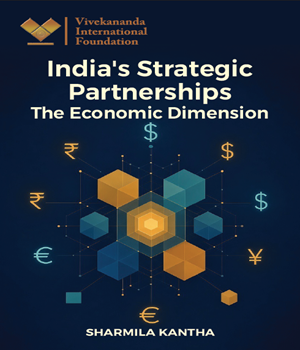
India’s Strategic Partnerships: The Economic Dimension

India has concluded a large number of Strategic Partnerships (SPs) as a flexible instrument of foreign policy. This paper examines the economic dimension of these partnerships, focusing on trade, investment, resources, technology, and skills and mobility. Drawing on merchandise trade data (2011–2025), FDI and ODI stocks, and institutional mapping of nine long-standing partners—South Africa, France, Germany, Japan, Brazil, Malaysia, the UAE, Australia and the United States—it finds that the relationship between SPs and bilateral trade performance is tenuous.

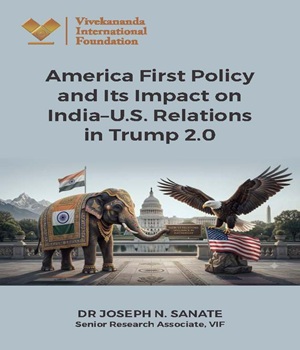
America First Policy and Its Impact on India–U.S. Relations in Trump 2.0

The return of Donald J. Trump to the White House in January 2025 has brought the “America First” doctrine back to the centre of U.S. foreign policy, with significant implications for India–U.S. relations. In its second iteration, the doctrine has combined economic nationalism, protectionist trade policies, restrictive immigration measures, demands for greater burden-sharing, and a transactional approach to international partnerships, while continuing to identify China as a principal long-term strategic competitor.

Why India's Next National Mission Has Already Begun

When COVID-19 struck, nations that built sovereign public-health capability - domestic vaccines, digital delivery platforms, distributed testing - survived with economies and societies intact. India, against every expectation, became the world’s largest vaccine manufacturer and administered 2.2 billion doses on a platform it built itself1. Artificial intelligence is the next pandemic. The playbook exists. India wrote much of it.

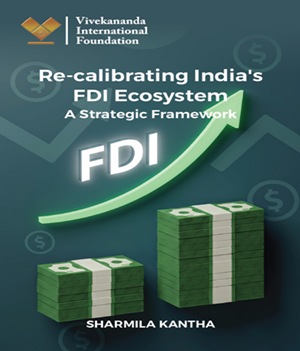
Re-calibrating India’s FDI Ecosystem: A Strategic Framework

Foreign Direct Investment (FDI) plays a pivotal role in a country’s access to funds for development as well as its exports, employment, technology and global value chain integration. An increasingly fragmented geopolitical environment characterised by friend-shoring, supply chain relocation, and rising policy uncertainty necessitates a closer examination of India’s FDI trends and future risks and opportunities. This paper examines global FDI trends and analyses India’s recent FDI performance, including sectors, source countries and state performance.

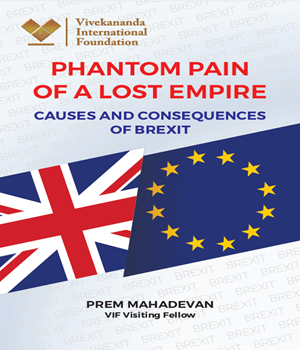
Phantom Pain of a Lost Empire: Causes and Consequences of Brexit

On 23 June 2016, the ‘United Kingdom of Great Britain and Northern Ireland’ chose via a referendum to leave the European Union. Reciting the full name of the UK is not a mere formality here – it serves to illustrate how one nation can affect the future of three others as well. By most measures, the UK has been poorly served by ‘Brexit’, and responsibility for this substantially (though not exclusively) lies with the English nation, more than the Scots, Irish or Welsh.

India-China Boundary Negotiations and the ‘Early Harvest’: A Critical Assessment

The Special Representatives (SR) mechanism on the India-China boundary question was constituted during Prime Minister AB Vajpayee’s visit to China in June 2003 when “The two sides agreed to each appoint a Special Representative to explore, from the political perspective of the overall bilateral relationship, the framework of a boundary settlement”.

AGI for Bharath: Sovereignty, Security, and Societal Transformation

The “AGI for Bharath” Conference was conceived as a first-of-its-kind strategic dialogue bringing together India’s defence leadership, technology community, intelligence establishment, policy architects, and academic institutions to address the single most consequential strategic challenge of the twenty-first century: India’s position in the global race toward Artificial General Intelligence (AGI). The Conference, which was held at Bharath Mandapam in New Delhi on 17 February 2026 during the India AI Impact Summit, structured around five thematic pillars:

A Glimpse of China’s Criminal World: ‘Strike Hard’ to Anti-Gambling Campaigns

This study examines the evolution of China’s anti-crime and anti-gambling measures from the adoption of the first criminal law in 1979 to the institutionalized governance strategies of the 2020s. It situates organized crime within the broader trajectory of political campaigns, economic reforms, and corruption control, highlighting how episodic ‘Strike Hard’ crackdowns gradually transformed into permanent, systematized enforcement. Early campaigns blurred distinctions between political dissent and social crime, embedding repression within justice.

China’s Military Shakeup

The investigation of Central Military Commission (CMC) Vice Chairman Zhang Youxia and Chief of Staff Liu Zhenli marks one of the most consequential episodes in the contemporary evolution of China’s civil–military relations. While officially framed as a response to “serious disciplinary and legal violations,” the purge appears less rooted in conventional corruption than in deeper structural tensions within the People’s Liberation Army (PLA) and the increasingly personalist architecture of governance under Xi Jinping.

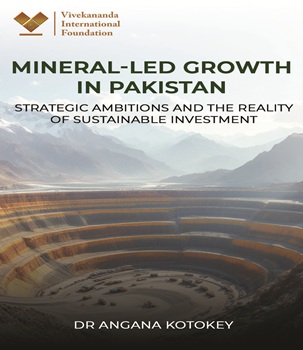
Mineral-Led Growth in Pakistan - Strategic Ambitions and The Reality of Sustainable Investment

Pakistan’s mineral industry has the potential to serve as a key driver of economic growth and strategic influence, positioning the country as a relevant participant in global critical-mineral supply chains. Growing international demands for minerals driven by their usage in the energy transition, defence, and advanced manufacturing have further enhanced their geostrategic importance.

Contact Us